 01793 676257
 Support




Important compliance changes for LCV drivers and operators.
Are you be affected?
From 1st July 2026, operators and drivers of light commercial vehicles (LCVs) with a gross vehicle weight of over 2.5 tonnes and up to 3.5 tonnes will be legally required to use a Smart Tachograph 2 – sometimes referred to as G2V2 – and comply with EU drivers’ hours rules if they are engaged in international cross-border freight transport or cabotage.

This extension of tachograph regulations now brings LCV operators in line with HGV operators when engaged in cross border, commercial transportation.
It’s also important to note that this is not the first regulatory change affecting LCV operators. Since May 2022, operators using vans or vehicle and trailer combinations over 2.5 tonnes for hire or reward in the EU have been required to hold a standard international operator licence. The July 2026 change builds on this by introducing tachograph and drivers’ hours requirements.
Drivers and operators of qualifying LCVs should also be aware that authorities can perform remote tachograph checks using DSRC (Dedicated Short-Range Communication) technology. This allows enforcement officers to identify potential infringements and target vehicles for roadside inspections, rather than issuing penalties solely based on remote data.
Important definitions
Gross Vehicle Weight (also referred to as Maximum Authorised Mass (MAM) means the maximum total loaded weight of the vehicle, including passengers, goods and any attached trailers etc. Note: If your van is 2.1 tonnes but you attach a trailer that brings the total combination weight over 2.5 tonnes, you are in scope.
Cabotage is defined as the transporting of goods within a country if that vehicle is registered in a different country. So, for example, a 2.5-ton van registered in the UK delivering goods in Germany after entering that country as part of an international journey.
Smart Tachographs are digital devices for recording driver activities such as driving time, break, and rest periods with enhanced security and communication capabilities.
Who do the new rules apply to?
- Operators of commercial light vehicles who are engaged in international cross border freight transport or cabotage, with a gross vehicle weight of over 2.5 tonnes and up to 3.5 tonnes.
- Vehicles that exceed the 2.5-tonne threshold at any point during an international journey will be subject to tachograph regulations, even if they started below that weight
- Operators making only occasional international deliveries must still comply fully with the expanded tachograph requirements and that applies even if your van is travelling empty across borders but with the intention of collecting a commercial cargo.
Who is exempt
You will not be required to comply with the new regulations if:
- You only operate within the UK and your vehicles never cross any international borders.
- Your vehicle never exceeds the 2.5-tons limit at any point during its journey (remember this is the gross weight limit.)
- You are transporting your own goods or equipment (not for hire or reward), and driving is not the driver’s main activity.
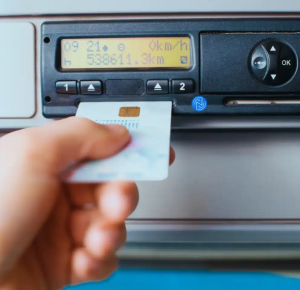
The legal standard for this exemption is that driving must not be the “main activity” of the person operating the vehicle.
In practice, this is assessed based on the driver’s overall role and responsibilities. Directive (EU) 2022/2561 notes that driving is generally not considered the principal activity where it represents less than 30% of the driver’s rolling monthly working time. However, this should be treated as a guiding principle rather than a strict legal threshold.
An example of this might be a UK company holding maintenance agreements with international customers which requires them to drive their own vans to various cross border locations, transporting their own equipment to fulfil the maintenance contract.
Key things you need to know
What are the Drivers’ Hours Rules?
This extension of tachograph regulations aligns LCV drivers and operators with HGV operators when engaged in cross-border commercial transportation. This means you will need to comply with EU drivers’ hours requirements, including:
- The daily driving limit is 9 hours (can be extended to 10 hours twice a week)
- The weekly driving limit is 56 hours with a maximum of 90 hours over two weeks
- Breaks: A minimum 45-minute break after 4.5 hours of driving.
A break can be split into two periods, the first being at least 15 minutes and the second at least 30 minutes (which must be completed after 4.5 hours driving)
- Daily rest; 11 hours regular daily rest, which can be reduced to 9 hours no more than three times a week.
- Weekly rest; 45 hours weekly rest, which can be reduced to 24 hours, provided at least one full rest is taken in any fortnight.
There should be no more than six consecutive 24-hour periods between weekly rests.
Source Gov.UK – simplified guidance EU drivers’ Hours
Understand ‘Posted Drivers’ rules
The definition of “posted driver” refers to a driver who is employed by a company in one country and works in another country for a limited period. This is governed by the EU Directive (2020/1057), which requires that posting declarations be submitted through the EU International Market Information (IMI) system.
As a UK operator if your drivers carry out transport operations for a limited period in any EU Member State, then those drivers are classified as a ‘posted driver’ if they perform any of the following operations;
- Cabotage – transporting of goods within a country if that vehicle is registered in a different country.
- Cross trade – transport operations between EU member states where your business is not established in those countries.
- Combined transport operations – If the first or last part of a combined transport operation is a cross-trade or cabotage operation, then the driver is regarded as a posted driver only when performing that first or last part.
- Unladen journey – A journey that is carried out in connection with a cabotage or a cross-trade operation that falls under posting rules.
In the event of a roadside check your drivers must have with them;
- a copy of the posting declaration (electronic or paper version)
- evidence of transport operation(s), taking place in the host Member State (e.g. a consignment note)
- tachograph records. Drivers must be able to produce records for the current day and the previous 56 days (this requirement increased from 28 days recently).
See Posted Drivers for more details.

What operators need to do.
If the new regulations apply to you, your vehicles will need to be equipped with Smart 2 Tachographs to record driving hours, rest, and break times accurately. Recording this information is a fundamental requirement for compliance. Therefore, you must ensure that you have the following key elements in place before 1st July 2026;
- Smart 2 (G2V2) Tachographs correctly installed and working. Ensure they are calibrated by an approved centre.
- Establish your data downloading and storage processes. Driver data must be downloaded every 28 days and vehicle data every 90 days.
All data must be stored securely for a minimum of 12 months (24 months is recommended) and be easily accessible for inspection.
- Acquire the necessary digital tachograph driver cards. These are provided by the DVSA and may not arrive quickly so do this well in advance.
- Arrange driver training. Drivers who have never used a tachograph before will need proper training on how to operate the device, how to make manual entries, and how to manage their driving time and rest periods. Drivers will also require a valid driver’s CPC card.
Be aware that a high percentage of failures recorded during tachograph inspections are not the result of deliberate transgressions but arise from organisational failures leading to gaps in the data and incomplete records.
- Plan driver schedules so they won’t breach drivers’ hours rules.
- Ensure that all the necessary documents required for roadside checks are up to date and available in the vehicle.
Getting all of these things in place will take time so you need to start now.
Preparing for July
Although the deadline may seem some way off, getting ready for these changes will take time. Vehicles will need to be equipped with tachograph units, drivers will need to be trained, and processes must be established for downloading, storing and managing data correctly.
It’s also important to recognise that vehicles will need to be fitted or upgraded with tachographs ahead of the deadline, and this is likely to put significant pressure on calibration centres, which may become extremely busy or even backlogged as demand increases. Acting early will help you avoid delays and ensure your fleet is compliant in time.
Equally important is ensuring that driver schedules are planned in a way that aligns with drivers’ hours rules, and that all required documentation is readily available in the vehicle at any time. Starting early gives you the opportunity to put the right structure in place without disruption to your day-to-day operations.
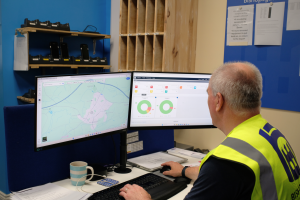 Convey are ready to help.
If your business is going to be impacted by the new regulations, you do need to act now! Time is short and the deadline is fast approaching but Convey can help you.
We specialise in delivering driver and vehicle compliance solutions for all commercial vehicle operators, large and small. Our Tachograph module helps you manage tachograph data, monitor driver activity and support your wider compliance processes.
Our range of compliance and fleet management software modules are built to form a comprehensive, integrated driver and vehicle compliance and adaptive fleet management solution. All managed from a single, easy to use, cloud-based interface.
Simply start with the modules you need now – Tachograph in this case – and add extra modules as you require them, to build a complete driver and vehicle compliance and wider fleet management system, tailored to your business needs. You will also benefit from valuable guidance and assistance from our experienced customer service team and our support specialists.
Convey’s Tachograph module is clear and easy to use, and you only pay for the days your drivers are on the road!
Our popular module combines remote data downloading and comprehensive tachograph analysis and reporting – which is exactly what you will need to easily manage your vehicles and driver obligations under the new regulations.
Request a demo or arrange a call with us today. We are ready to help you.